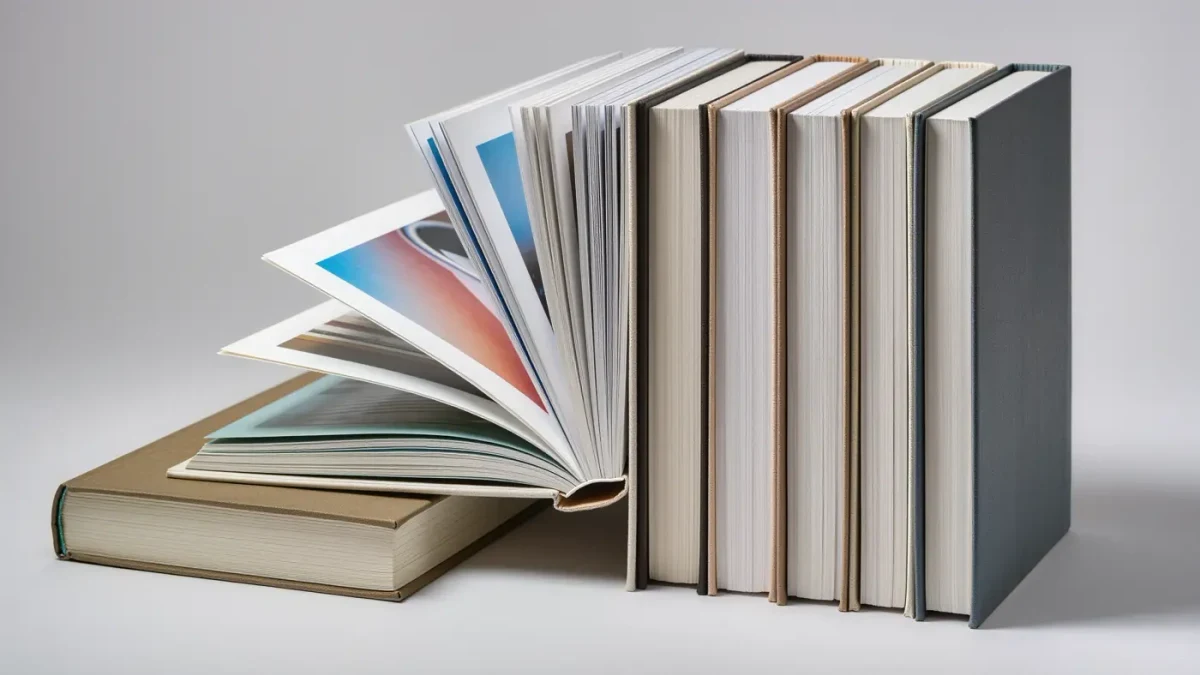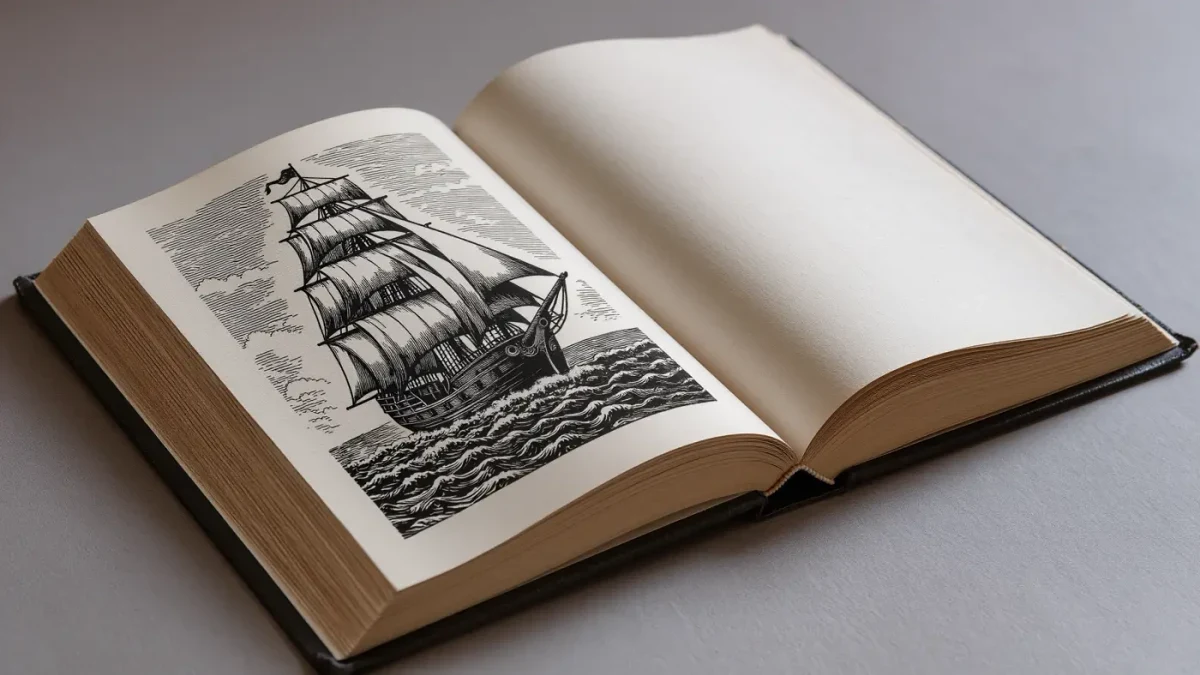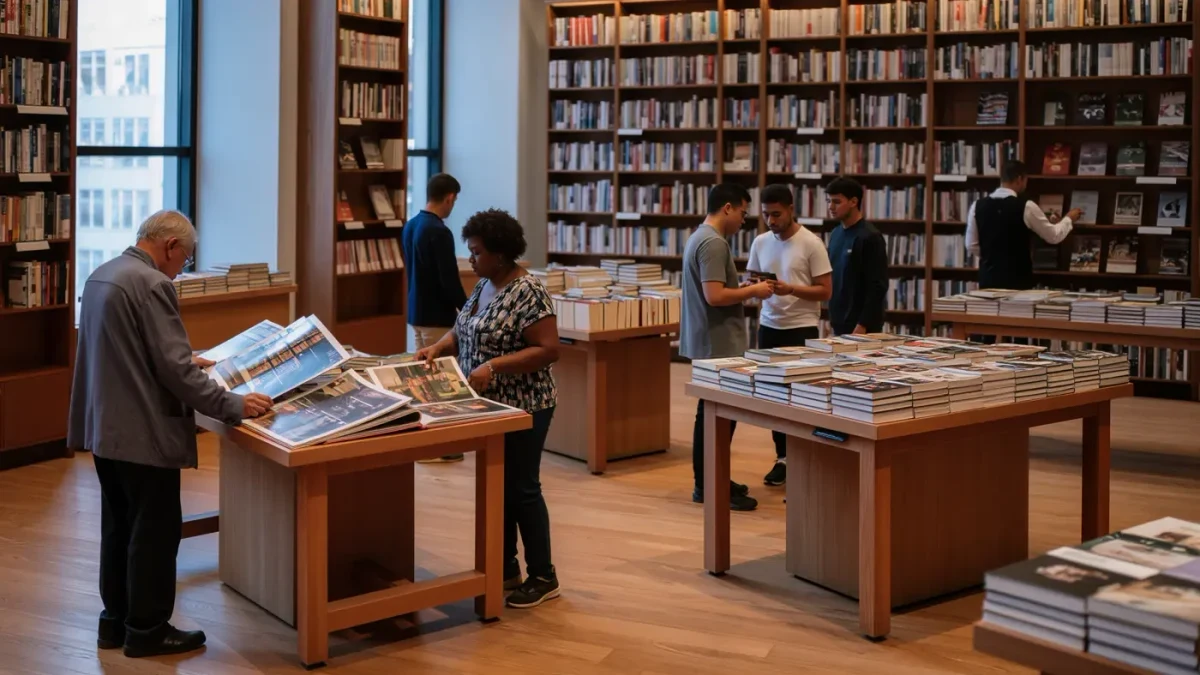
An artist's book is a work of art in book form: the object, its sequence and its mechanics are the art, not a container for it. Since Ed Ruscha's Twentysix Gasoline Stations (1963) codified the genre, the artist's book has moved from the countercultural margins into the collections of Tate and the Museum of Modern Art.
What exactly is an artist's book?
The book is the artwork, complete in itself. An artist's book is conceived by an artist, usually issued in an edition, and experienced through its structure — page order, scale, pacing, cover, price — rather than through images or text that could live elsewhere. Remove the book form and the work ceases to exist.
The genre crystallized in the 1960s and 1970s, when cheap offset printing met an art world bent on dematerialization. Lucy Lippard's anthology Six Years (1973) documented the shift; Dieter Roth was binding sausage into editions; Sol LeWitt was printing grids. In 1975 the Mexican-born artist Ulises Carrión argued in his essay "The New Art of Making Books" that a book's meaning lies in its ordering and rhythm rather than in any single page — still the genre's cleanest formulation.
Two corollaries follow. First, the multiple is the message: a book issued in hundreds of copies is a distribution system as much as an object, and its price is an artistic decision. Second, reading is the medium: an artist's book unfolds in time the way film does, page by page, and it dies when it is displayed open at a single spread under glass.
Why does Twentysix Gasoline Stations keep getting cited?
Because it set the genre's grammar. Ed Ruscha photographed gasoline stations along Route 66 between Los Angeles and Oklahoma City, printed them in uniform offset, self-published 400 copies in 1963, and priced the result like a paperback. No narrative, no hierarchy of images: the sequence is the work.
Everything about the volume reads as refusal. The photographs are deadpan; the stations are ordinary; the book is spare to the point of anonymity. The story, often retold, that the Library of Congress declined a copy for lack of apparent merit has only deepened its legend. Ruscha followed with Some Los Angeles Apartments (1965), Every Building on the Sunset Strip (1966) and Thirtyfour Parking Lots (1967), building a shelf of volumes he described as books to look at rather than to read.
The lineage ran two ways at once. Conceptual artists took the book as documentation of an idea; bookworkers took it as a site. Ruscha's editions satisfied both, which is why his name anchors nearly every account of the genre — including, evidently, this one.
Related stories: Wood and Word: Illustrated Classics · Cover Stories: Who Designs a Book Cover.
How does an artist's book differ from an illustrated book?
In an illustrated book, images serve a text that leads; in an artist's book, the book itself leads. The illustrated book and the deluxe livre d'artiste package pictures alongside words; the artist's book treats binding, sequence, price and distribution as artistic decisions — the container is the content.
The livre d'artiste is the useful contrast. Late nineteenth- and early twentieth-century Paris — the dealer-publishers, above all Ambroise Vollard — commissioned deluxe volumes in which prints by Bonnard or Picasso accompanied texts by Virgil or Balzac. The prints were original; the book was a luxury vehicle. A "book about art" sits further away still: a monograph or catalogue reproduces artworks that exist independently, and its design is service, not statement.
A blunt test separates all three. Unbind a livre d'artiste and you still have the prints; unbind a monograph and you still have the illustrations and the essay; unbind an artist's book and you have destroyed it. The book form is not the packaging of the work but the work's body.
Why do Tate and MoMA collect artist's books?
Because the book is the work, museums acquire it the way they acquire prints: as multiples, in editions, with catalogue entries. Tate and the Museum of Modern Art hold artist's books in dedicated study collections, consulted by appointment — shelved art rather than hung art.
Institutional collecting solved one problem and created another. A genre invented to circulate cheaply survives largely in special collections, where appointment slips have replaced the drugstore counter; first editions of Twentysix Gasoline Stations have fetched four-figure sums at auction. Conservation adds its own irony: books made to be handled must be protected from handling, their pages threatened by light and fingers in equal measure.
The compensations are real. Study rooms keep entire runs together, allow comparison at close range, and — through digitized records and honest reprints — let the general reader follow along without gloves. The collections of the Library of Congress and essays on arts desks such as BBC Culture have both widened the audience for bookwork scholarship.
Where should a curious reader begin?
In special collections reading rooms and honest reprints. Major research libraries hold artist's books viewable by request; publishers keep Ruscha's titles in print or reissue them; and exhibitions of bookworks tour regularly. The genre rewards handling, and handling requires either an appointment or an honest reprint.
A short first shelf might run as follows:
- Ruscha's gasoline stations and their sequels, in reprint or reading room, read in sequence;
- Sol LeWitt's grid books of the late 1960s, for arithmetic turned into pacing;
- any small-press edition from the 1970s photocopier underground, for the contrast between concept and artifact.
The point of the genre is exactly this comparative reading — the discovery that page order, trim size and price can argue as loudly as any image. The artist's book remains the most literal answer to the question of what a book of art might be: not a book about art, but art that happens to be a book.