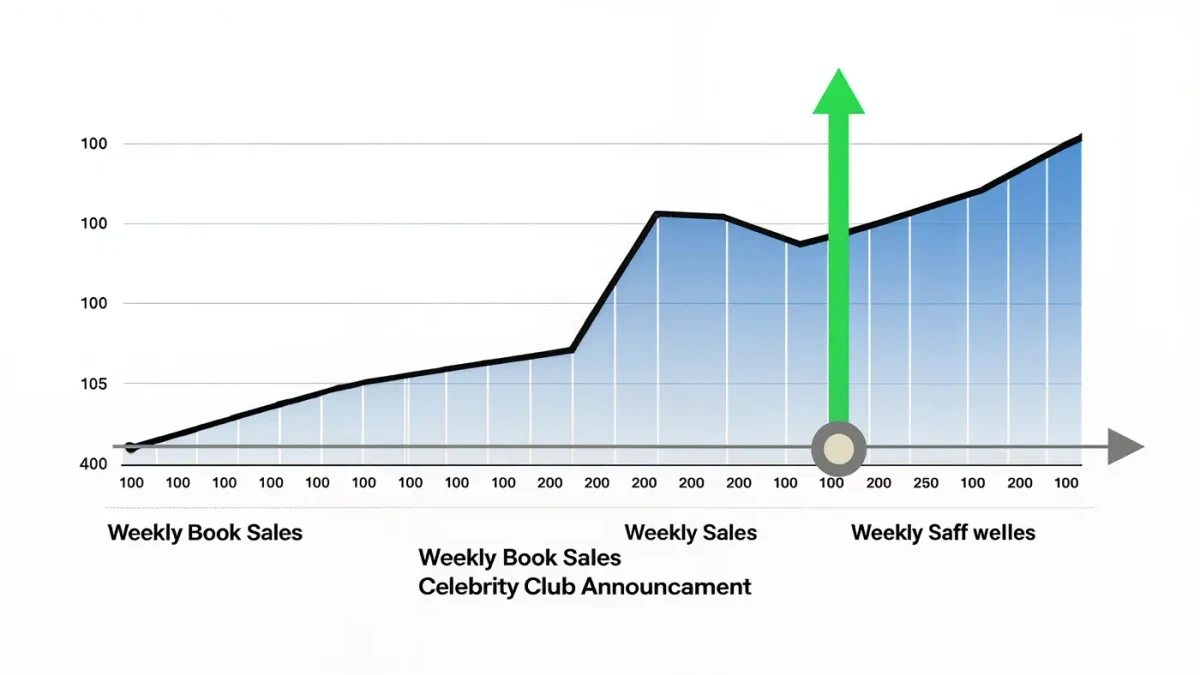
BookTok is the corner of TikTok where readers film themselves crying over novels, and its strangest commercial power is resurrection: it sells old books. Madeline Miller's The Song of Achilles (2011) reportedly went on selling in the millions a decade after publication, and Colleen Hoover's It Ends with Us (2016) climbed to the top of sales charts in 2022, years after its release.
The pattern repeats often enough to have a name in the trade: the backlist machine. What follows explains what BookTok is, why its arithmetic favors old books, and what the last few years suggest comes next.
What is BookTok?
A decentralized recommendation engine. Under hashtags like #BookTok, readers post reaction videos, shelf tours, and "books that destroyed me" lists; the algorithm pushes intense material to the viewers most likely to care, regardless of when the book was published. No gatekeepers, no review cycle, no expiration date.
The scale is the point: the hashtag has reportedly accumulated billions of views, and bookstore tables labeled "TikTok made me buy it" became a standard feature of retail. What began as organic fandom has become a distribution channel that publishers budget around — one that no publisher controls and every publisher courts.
How did a 2011 novel become a bestseller a decade later?
Through accumulated emotional testimony. The Song of Achilles (2011) had sold steadily for a decade, but a stream of tearful reaction videos reportedly pushed it to multimillion-copy sales — new viewers kept discovering the same clips, and the algorithm kept serving them, long after any marketing budget was spent.
Notice what did the work: not an advertisement, not a review, not a prize — a stranger's genuine grief on camera, replicated thousands of times. Each video functions as both endorsement and dare: this book will get you, too. The publisher responded the only way publishing can, with reprints and a new cover edition aimed squarely at the feed's demographic, and the novel settled in as a permanent fixture of the format's informal canon.
What is the Colleen Hoover phenomenon?
Backlist compounding at maximum scale. It Ends with Us (2016) became a BookTok cause, reportedly topping sales charts in 2022, and its success pulled Hoover's entire catalog with it — at moments, she has reportedly filled several of the top positions on national sales charts simultaneously.
The mechanics matter more than the records. BookTok did not just sell one Hoover title; it taught a mass audience to read her in order, hunting earlier books once the latest one hit — the catalog effect that publishers dream about. A film adaptation followed the book's second life, closing the loop between the feed and the wider culture. Hoover's own history — from self-published beginnings to traditional reissues — became part of the story the feed told about her.
Related stories: Women's Prize for Fiction Goes to Virginia Evans · Ears Wide Open: The Audiobook Decade in Numbers.
Why does TikTok sell old books so well?
Because the unit of persuasion is emotion, not news. A reaction video needs no release date to work — devastation is evergreen — and the algorithm rewards intensity over recency. Publishers market new books for weeks; BookTok can rediscover a ten-year-old title every few months, indefinitely, at no cost to anyone.
Demographics did the rest. The feed's core audience skewed younger than publishing's usual marketing target, and it arrived without the habits — hardcover loyalty, review-reading, prize-following — that channel older readers toward new releases. Freed from the publication calendar, that audience browsed by feeling, and feeling has no publication date.
The platform's structure also removes the social risk of enthusiasm. A viewer who would never post a review will post a video of themselves wrecked by chapter thirty-four, because on TikTok that is content, not criticism. Traditional coverage of the phenomenon — including from arts desks such as BBC Culture — keeps landing on the same observation: the feed sells feelings first and books second, and it turns out the books ride along just fine.
What does a BookTok hit look like in a bookstore?
Stacks, faces out, usually near the door. Retail learned fast that the feed's audience shops in person when a store signals membership — hence the signage, the tables, the shelf-talkers quoting the videos. Booksellers report customers arriving with screenshots rather than titles, asking for the book from the clip where someone cries in a parking lot.
It is retail theater with a feedback loop: displays generate their own videos, videos generate pilgrimages, and the store becomes both outlet and set. No previous recommendation ecosystem — reviews, prizes, clubs — ever produced that particular loop, because none of them lived inside the phone where the customers already were.
What has BookTok changed for publishers?
Marketing budgets, cover design, and reprint planning. Houses issue BookTok editions with moodier covers, keep backlist stock warm for rediscovery cycles, and weigh an author's platform presence in acquisitions. The risk is concentration: romance and fantasy dominate the feed, so other genres receive less of its magic.
The changes reach the warehouse. Backlist, long the sleepy half of publishing's economics, demands active inventory management, because any title can reignite at any moment — print runs sized for a book's third decade, not its first three months. Sales trackers and trade press such as The Bookseller chart these reversals routinely, and the data keeps saying the same thing: the feed moves physical copies, at scale, on timelines no marketing department can plan.
Is the BookTok effect fading?
The frenzy has normalized rather than disappeared. Publishers reportedly describe steadier, less explosive lifts as the feed's audience has aged and diversified across genres, but the core mechanism — readers persuading readers on camera — continues to move backlist in a way no advertising can match. The era of constant surprise bestsellers may be maturing; the era of surprise bestsellers is not.
What would actually end it is platform risk: BookTok lives inside a single app with an uncertain regulatory position in the United States, and publishing has learned, cautiously, to build sales channels it does not control. Until that resolves, the sensible posture is the one publishers have adopted — feed the feed, stock the backlist, and stay ready for the next decade-old novel to catch fire again.